
As Donald Trump prepares to take office for his second term, his decision to invite two prominent Latin American leaders—Argentine President Javier Milei and Salvadoran President Nayib Bukele—to his inauguration on January 20 marks an important event in international relations. These two figures, both admired by Trump and all conservative allies, have become models for the new administration’s approach to governance.
Milei and Bukele’s rise to prominence has been marked by their bold policies, which resonate with Trump’s own political style. Milei, an anarcho-capitalist and libertarian, has gained international attention for his economic reforms in Argentina, pushing for drastic measures to combat the country’s fiscal crisis. His approach to governance, which focuses on limited government and individual freedoms, aligns closely with Trump’s populist ideology. During their meeting in November 2024 at Trump’s Mar-a-Lago estate, Trump praised Milei for his success in “making Argentina great again,” a sentiment that mirrors his own campaign slogan from 2016.

Similarly, Bukele has become a symbol of tough leadership for Trump’s supporters. Bukele’s aggressive stance on crime and his controversial state of emergency in El Salvador, which has resulted in the highest incarceration rate in the world, aligns with Trump’s “law and order” rhetoric. Bukele’s appearance at the Conservative Political Action Conference (CPAC) in 2024, where he declared that “globalism is dead” in El Salvador, struck a chord with American conservatives who admire his no-nonsense approach to governance.
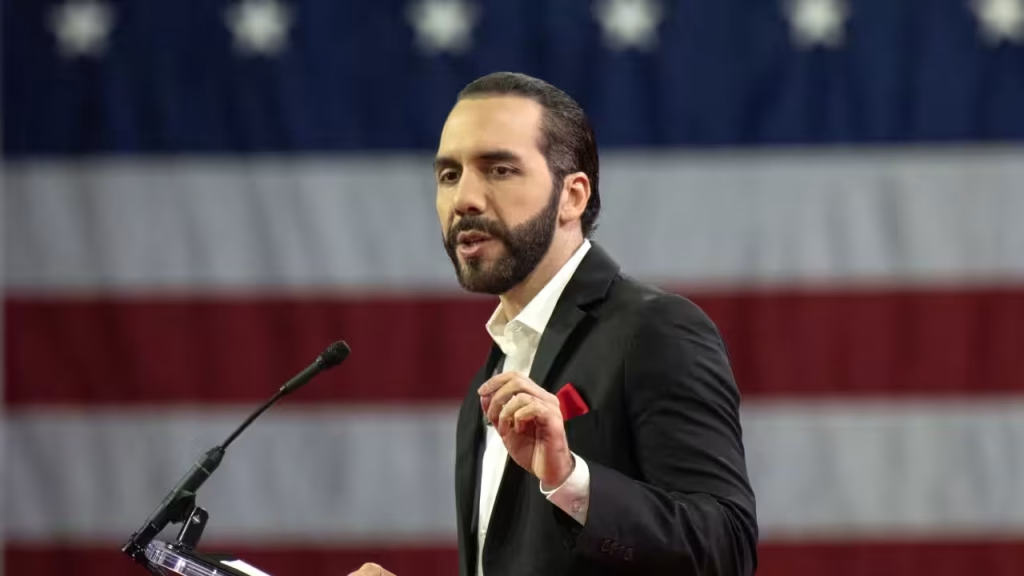
Both leaders have cultivated an image of political outsiders who take decisive action, often bypassing traditional democratic norms to achieve their goals. This has made them attractive models for Trump, who has long positioned himself as a leader willing to challenge the establishment and take bold, unconventional actions. Their focus on national sovereignty, economic reform, and strong security measures reflects the priorities of the new Trump administration.
For Trump, the invitation to Milei and Bukele is more than just a diplomatic gesture—it is a signal of the direction he intends to take in his second term. By aligning himself with these two leaders, Trump is indicating that his administration will continue to embrace populist, right-wing policies that prioritize national interests over global cooperation. Milei and Bukele’s success in pushing through radical reforms will likely serve as a blueprint for Trump as he seeks to implement his own agenda in the United States.
As Trump settles into his new role, the influence of Milei and Bukele will undoubtedly shape his approach to governance. Whether or not these Latin American leaders will remain models for the U.S. government in the long term is yet to be seen, but for now, they are central to the vision of Trump’s America-first policies.