


Costa Rica’s president-elect, Laura Fernández, has announced plans to adopt key elements of El Salvador’s security strategy under President Nayib Bukele, signaling a potential shift in regional approaches to combating organized crime. Speaking in a recent interview, Fernández pointed to El Salvador’s dramatic reduction in violence as a model worth studying and adapting.

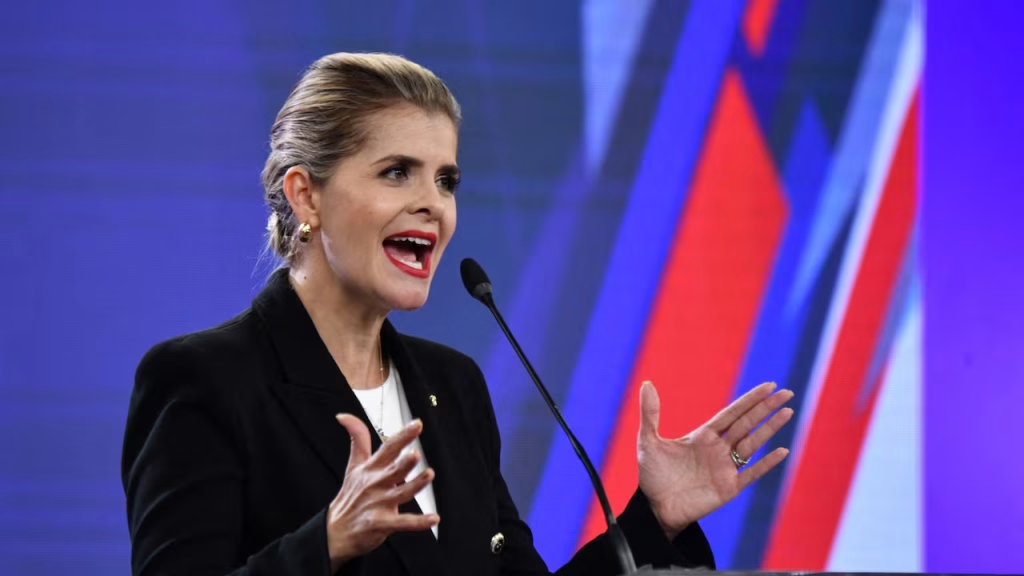
During the interview, Fernández expressed clear admiration for Bukele’s policies, particularly those aimed at dismantling criminal networks. “Yes, sir, I am going to replicate it,” she said when asked whether she would implement similar strategies in Costa Rica. Her remarks underscore the growing influence of El Salvador’s security framework across Central America.
A central focus of Fernández’s proposal is the prison system, which she believes plays a decisive role in weakening organized crime. She highlighted how El Salvador’s high-security incarceration model has effectively severed communication between imprisoned gang leaders and their networks outside. “What I admire is how they managed to disconnect and dismantle organized crime structures,” she explained.
Fernández contrasted this with Costa Rica’s current system, where, according to her, incarcerated individuals often maintain ties to criminal organizations. “In our country, many continue operating from prison due to the lack of strict controls,” she said, emphasizing the need for reforms that prevent criminal activity from continuing behind bars.
Set to take office in May, Fernández also raised concerns about the stance of some international organizations. “It draws my attention that many focus heavily on the rights of criminals, but not proportionally on the rights of victims,” she stated. As Costa Rica prepares to move forward with projects inspired by El Salvador’s model, including a new high-security facility, the regional impact of Bukele’s policies continues to grow.