
El Salvador is positioning public investment as a central engine of economic growth in 2026, with a national program that exceeds $2.68 billion and represents roughly 7 percent of the country’s GDP. While initial allocations provide a roadmap, economists in the country are closely watching execution rates, which ultimately determine the real impact on economic activity, job creation, and sectoral growth.

Recent data suggests a positive trend. In 2025, the government executed more than $1.53 billion in public investment, marking a 36 percent increase compared to the previous year. Despite reaching just under half of the programmed total, this level of execution has already contributed to momentum in key industries such as construction, infrastructure, and public services, signaling stronger potential outcomes if implementation improves further in 2026.
The current year’s plan includes 235 projects managed by 43 public institutions, spanning transportation, education, health, and digital infrastructure. Financing will rely heavily on external loans, which account for over 60 percent of the total, complemented by domestic resources and international donations. Early indicators from January show an execution rate above 80 percent, suggesting a more efficient start compared to prior years.
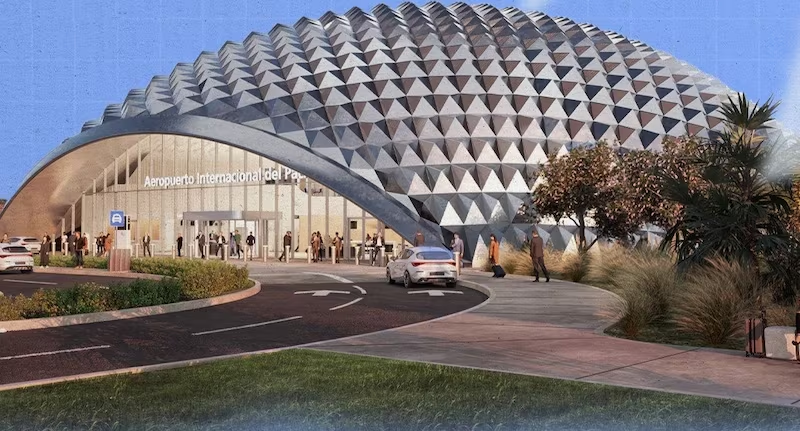
Among the flagship initiatives, the construction of the Pacific International Airport in La Unión stands out as the single largest investment, reflecting the government’s ambition to strengthen regional connectivity and attract foreign investment. At the same time, major funding is being directed toward education, including nationwide programs aimed at reducing the digital divide, modernizing schools, and expanding access to quality learning environments.
Infrastructure projects such as the Los Chorros highway expansion, a new Apopa bypass, and a submarine cable system further highlight the country’s focus on improving logistics, mobility, and technological capacity. Combined with health initiatives and continued investment in public works, El Salvador’s 2026 program underscores a broader strategy to stimulate sustained economic growth while enhancing long-term competitiveness.
